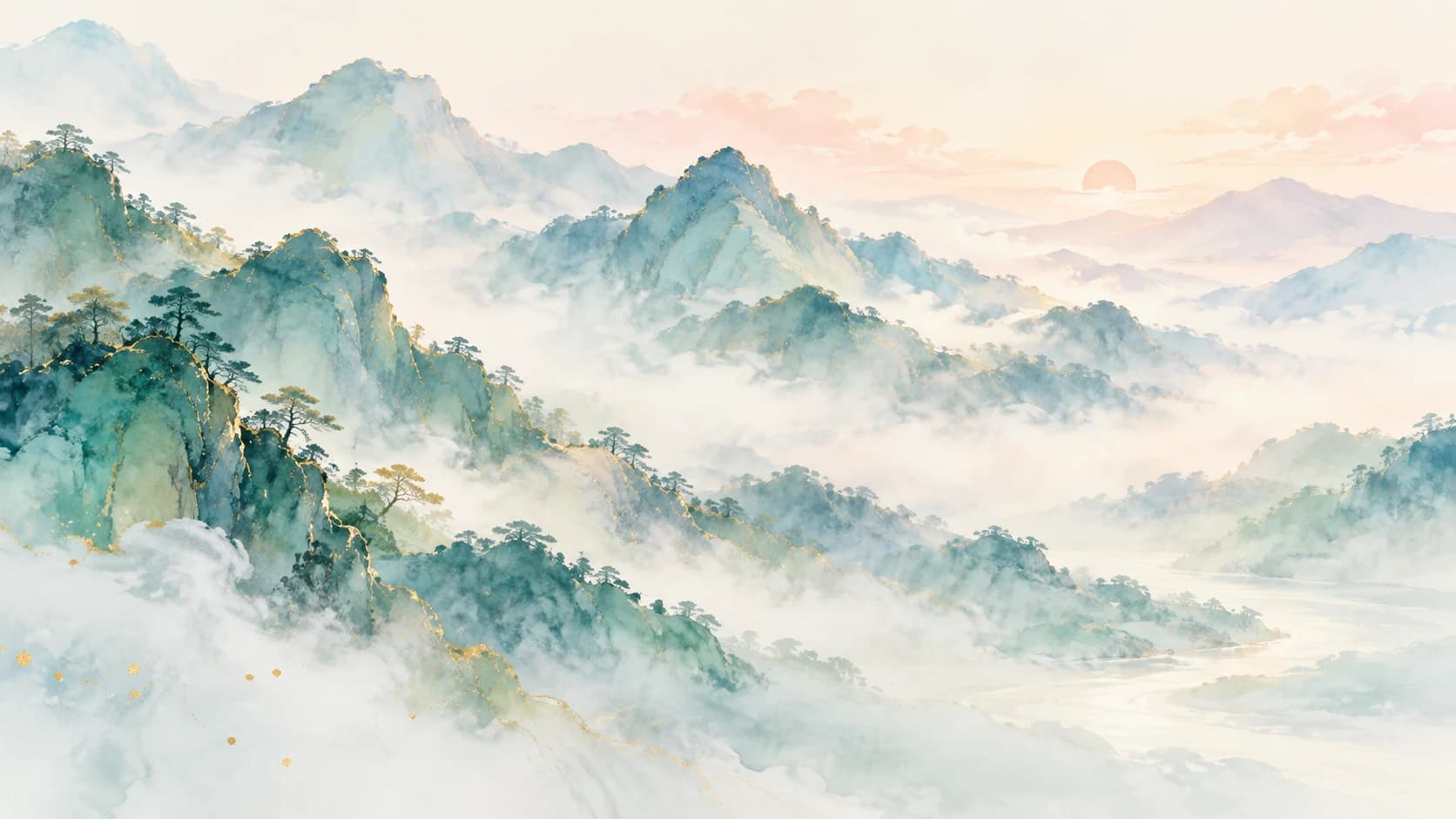
Start with 清川 Qīngchuān for a clear river, 澄宁 Chéngníng for still water, or 观澜 Guānlán for watching waves. These water-inspired Chinese names lead to different pictures. Choosing the picture first is more useful than treating every character with a water component as interchangeable.
These eight given names are editorial proposals for adults choosing a Chinese name. Example full names let you test the sound; keep your own Chinese surname if you have one. Nature imagery does not determine gender, age, personality, or a name’s suitability for every speaker. Pinyin below uses the intended Mandarin readings.
Choose the picture first
For a river landscape: 清川 describes the water itself; 江月 brings in moonlight. River names
For clarity: 澄宁 stays quiet, 澄远 opens toward distance, and 涵清 makes the water connection more indirect. Clear-water names
For motion: 观澜 observes waves, 静澜 sets stillness beside them, and 云涛 carries their scale into the sky. Wave names
River names
1. 清川 Qīngchuān — a clear river
清 means clear or pure; 川 means a river. Together they give the most direct river picture here: water whose clarity matters more than its force. Choose Qīngchuān over Jiāngyuè if you want the river itself to be the focus, without a moonlit setting. Ministry of Education: 清 Ministry of Education: 川
Try 李清川 Lǐ Qīngchuān: the third-tone surname leads into two first tones, so the given name stays level without a repeated syllable. Keep 清 distinct from 晴 qíng, “sunny,” when explaining the spelling. The scenic combination has a literary quality; it does not make a claim about the bearer’s moral purity.
2. 江月 Jiāngyuè — a river and the moon
江 can mean a large river; 月 means the moon. A moon above a river, or its reflection on the surface, is the scene we draw from those two nouns. Neither character literally means “reflection.” Choose Jiāngyuè when light and the time of day interest you more than currents or waves. Han Dian: 江 Han Dian: 月
许江月 Xǔ Jiāngyuè gives the compact first-tone/fourth-tone given name a separate third-tone opening. Its scene is more specific than Qīngchuān, but it leaves the relationship between river and moon unstated. That openness can suit a literary introduction; use the whole name aloud before deciding that the image suits your everyday life.
Clear-water names
3. 澄宁 Chéngníng — clear water with stillness
澄, read chéng here, describes water that is still and clear. 宁 níng means peaceful or settled. Their combination keeps the water image quiet. Choose Chéngníng over Jìnglán if you want to name stillness and clarity directly rather than evoke waves. Ministry of Education: 澄 Han Dian: 宁
李澄宁 Lǐ Chéngníng starts with a third tone and ends in two rising tones; pronounce both final syllables rather than flattening them into one rise. The two characters have other readings in other contexts: this proposal uses chéng and níng. It expresses a chosen atmosphere, not a promise of emotional steadiness.
4. 澄远 Chéngyuǎn — clarity and distance
澄 supplies the clear-water sense; 远 means far or distant. The water stretching into the distance is our interpretation of their pairing, not a dictionary definition of the complete name. Choose Chéngyuǎn over Chéngníng if you prefer an open horizon to an explicitly peaceful mood. Ministry of Education: 澄 Han Dian: 远
顾澄远 Gù Chéngyuǎn moves through falling, rising, and third tones, with a clear boundary between each syllable. The distance image is more abstract than the river in Qīngchuān: someone hearing the name without its characters may miss the water connection. Use it if you enjoy explaining that quieter association.
5. 涵清 Hánqīng — holding clarity
涵 has senses of containing and immersing; 清 means clear or pure. “Holding clarity” is the reading chosen here. This is the least literal water proposal in the group: its connection comes through the meanings of immersion and clarity, not merely the three-dot-water component in the characters. Han Dian: 涵 Ministry of Education: 清
周涵清 Zhōu Hánqīng has a level–rising–level sequence with distinct beginnings. Choose it if you want an indirect water association that can also carry an abstract meaning. Choose Qīngchuān instead if it matters that another reader immediately sees a river. 涵清 does not literally translate as “clear lake,” and it does not certify the bearer’s thoughtfulness.
Wave names
6. 观澜 Guānlán — watching large waves
观 guān means to observe; 澜 means large waves. The observer and the water remain distinct: this name does not say that the person is turbulent. Choose Guānlán if you like attention directed toward movement, rather than the still-water scene of Chéngníng. Han Dian: 观 Han Dian: 澜
陆观澜 Lù Guānlán places a falling-tone surname before level guān and rising lán. Keep guān distinct from the other reading guàn. The compact verb–object expression can feel like a literary name; decide whether you want that explicit action in an everyday introduction. Its reflective quality is an editorial reading, not a personality assessment.
7. 静澜 Jìnglán — stillness beside waves
静 means still or quiet; 澜 means large waves. We read the pairing as stillness associated with waves, whether as a tranquil scene or a contrast between calm and movement. Neither character specifies an ocean. Choose it over Guānlán if you prefer quieter imagery to the explicit action of watching waves. Han Dian: 静 Han Dian: 澜 The dictionary’s 波澜 entry includes 波澜不惊, showing that waves can be described as undisturbed.
叶静澜 Yè Jìnglán starts with two falling tones and finishes with a rising tone. Be ready to distinguish 澜 from 兰 lán, “orchid,” which has the same pronunciation. If you want to emphasize water’s stillness and clarity directly, Chéngníng makes those qualities more explicit.
8. 云涛 Yúntāo — clouds with the scale of waves
云涛 is a recorded expression for clouds billowing like waves; it can also refer to surging white waves. This proposal foregrounds the cloud image. Choose Yúntāo for scale and visible movement. It is a different direction from the observer in Guānlán and the quieter imagery in Jìnglán. Han Dian: 云 Han Dian: 涛 Han Dian: 云涛
张云涛 Zhāng Yúntāo has a level–rising–level contour and distinct syllables. The image can sound expansive, so it may feel too dramatic if you want a small stream or still pool. 云涛 is also an established expression outside names; a surname helps make your intended personal-name use clear.
Try two complete names
Choose two whose differences you can explain in one sentence. Say each with your surname in a short introduction, then write it for someone who uses Chinese in the setting that matters to you. Ask what they first hear and how they would spell it. A pleasing picture is only part of the choice; homophones, local pronunciation, and your comfort repeating the name matter too.
For the other landscape direction, explore Chinese names inspired by mountains and forests. The nature-inspired Chinese names overview compares the collections before you make a shortlist. For a more personal comparison process, read how to choose between Chinese name candidates.
Sources & Notes
Character and compound readings and meanings were checked against the dictionary entries linked beside each proposal on October 7, 2026. The Ministry of Education entries distinguish the relevant readings and senses; Han Dian supplies the other lexical references. Simplified characters appear in the proposals; a linked dictionary may show traditional forms. Dictionary evidence supports the words and readings, not popularity, uniqueness, gender certainty, or a claim that a complete proposal comes from an ancient text.
The scenes, comparisons, and style descriptions are our editorial interpretations. These are not results from a native-speaker panel or a personalized naming-agent run. Full-name examples are illustrative; no connection to a real person is implied. Local pronunciation and individual fit need a fresh check with your complete name.