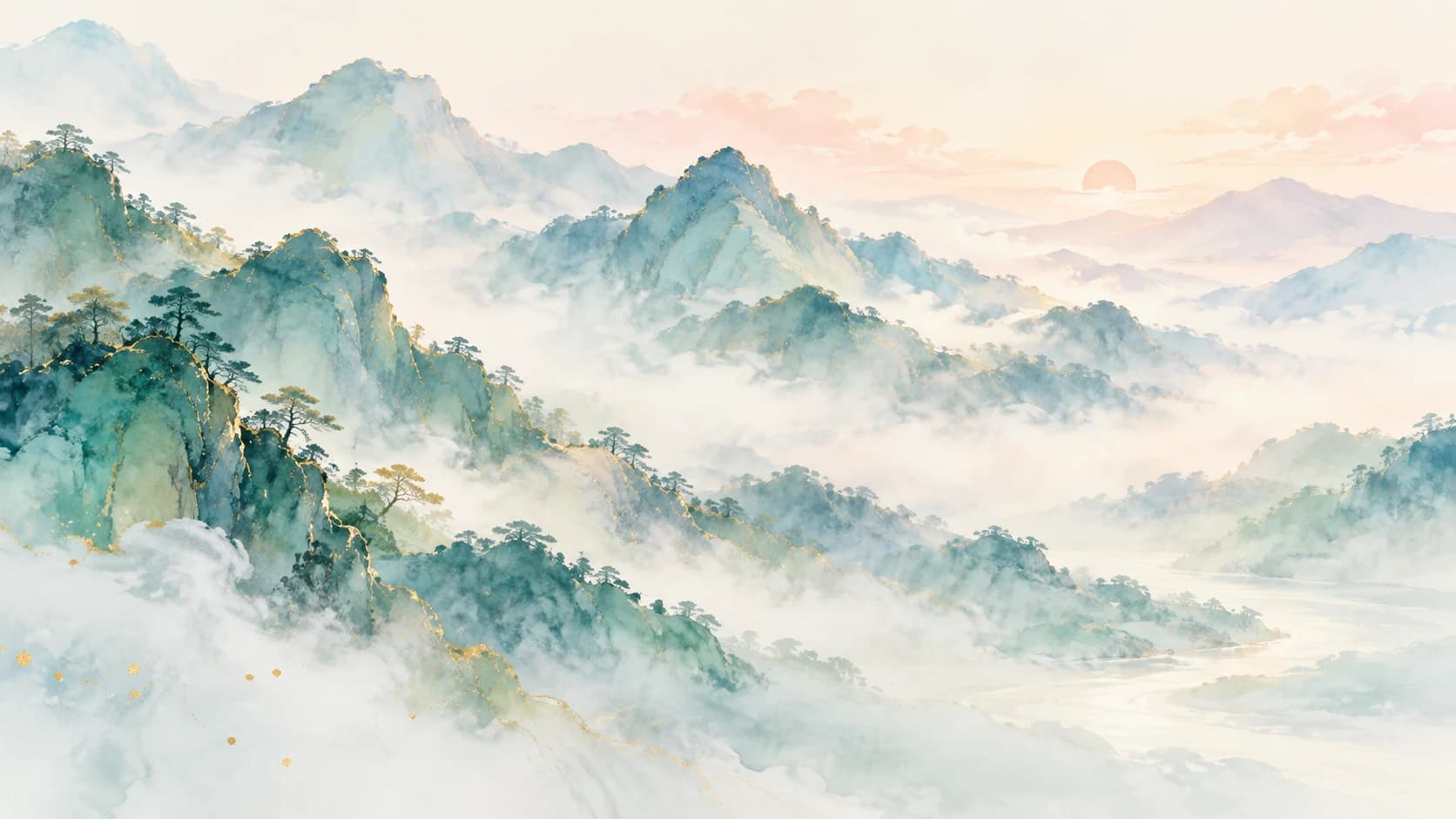
For an open presentation, vitality can live in a field, a green plain, or the first light of the day. 新禾 and 青原 are concrete landscapes; 初阳 and 春和 are atmospheric; 予春 gives spring a personal, giving gesture. These choices favor living scenes over declarations of achievement, while still sounding different from one another.
These are complete editorial suggestions for adults choosing their own Chinese name: a surname followed by a two-character given name. Keep your existing Chinese surname if you have one. The style label describes our impression of the full name, not a restriction on who may use it.
Compare all three presentations in the Vitality name guide.
1. 程新禾 Chéng Xīnhé: New growth in a field
Example full name: 程新禾 — Chéng Xīnhé. Base tones: 2–1–2. The complete name has dictionary tones 2–1–2. Try the given name with your own surname.

程新禾
In Chinese you can call me程新禾
New growth in a field
New growth in a field An existing watercolor design selected for this name card.
新禾 gives vitality a small, tangible beginning: young grain growing in a field. Its uncluttered landscape feels open in this selection. It suits a reader who prefers everyday living growth to a declaration of personal strength.
Meanings: 新 contributes new; 禾 contributes grain plant. [1]
Sound and everyday use: The dictionary-tone sequence is 2–1–2. 禾 hé sounds like 和 and 河. Explain it through 禾苗; the field image does not depend on using 程 as your surname.
2. 江初阳 Jiāng Chūyáng: The day's first light
Example full name: 江初阳 — Jiāng Chūyáng. Base tones: 1–1–2. The complete name has dictionary tones 1–1–2. Try the given name with your own surname.
江初阳
In Chinese you can call me江初阳
The day's first light
The day's first light An existing watercolor design selected for this name card.
初阳 presents vitality through the light at a day's beginning. Its meaning is straightforward but more atmospheric than 新禾. The name has an open landscape quality, though individual listeners may hear a masculine lean in 阳.
Meanings: 初 contributes beginning; 阳 contributes sunlight. [2]
Sound and everyday use: The dictionary-tone sequence is 1–1–2. 阳 yáng sounds like 杨. “最初的初,阳光的阳” keeps the light image distinct from the tree or surname character.
3. 陶予春 Táo Yǔchūn: Offering a sense of spring
Example full name: 陶予春 — Táo Yǔchūn. Base tones: 2–3–1. The complete name has dictionary tones 2–3–1. Try the given name with your own surname.
陶予春
In Chinese you can call me陶予春
Offering a sense of spring
Offering a sense of spring An existing watercolor design selected for this name card.
予春 brings giving together with the season of renewed growth. The image is a contribution of springlike life to the places one inhabits. Its lightly poetic construction leaves the presentation open rather than overtly gendered.
Meanings: 予 contributes to give; 春 contributes spring. [3]
Sound and everyday use: The dictionary-tone sequence is 2–3–1. Use yǔ for “give,” not yú, the classical first-person reading. The name is an editorial combination rather than an idiom.
4. 顾青原 Gù Qīngyuán: An open green plain
Example full name: 顾青原 — Gù Qīngyuán. Base tones: 4–1–2. The complete name has dictionary tones 4–1–2. Try the given name with your own surname.
顾青原
In Chinese you can call me顾青原
An open green plain
An open green plain An existing watercolor design selected for this name card.
青原 gives vitality space: a plain filled with green growth. Its landscape is less intimate than a bud and less energetic than 振生. The whole name has an open, outdoors-oriented literary presentation here.
Meanings: 青 contributes green; 原 contributes a plain. [4]
Sound and everyday use: The dictionary-tone sequence is 4–1–2. 青 qīng sounds like 清. Explain “青色的青,原野的原” to distinguish the green landscape from a clear spring.
5. 许春和 Xǔ Chūnhé: The mildness of a living spring
Example full name: 许春和 — Xǔ Chūnhé. Base tones: 3–1–2. The complete name has dictionary tones 3–1–2. Try the given name with your own surname.
许春和
In Chinese you can call me许春和
The mildness of a living spring
The mildness of a living spring An existing watercolor design selected for this name card.
春和 expresses the mild conditions of spring. The vitality here is life flourishing in a favorable season, not perpetual busyness. Its familiar seasonal language makes this one of the gentler open-style options.
Meanings: 春 contributes spring; 和 contributes gentle harmony. [5]
Sound and everyday use: The dictionary-tone sequence is 3–1–2. 和 is hé here. The name emphasizes atmosphere, so choose 新禾 or 芃芃 if you want a more specific plant image.
Compare the five choices
| Name | Main emphasis | Dictionary tones |
|---|---|---|
| 程新禾 Chéng Xīnhé | New growth in a field | 2–1–2 |
| 江初阳 Jiāng Chūyáng | The day's first light | 1–1–2 |
| 陶予春 Táo Yǔchūn | Offering a sense of spring | 2–3–1 |
| 顾青原 Gù Qīngyuán | An open green plain | 4–1–2 |
| 许春和 Xǔ Chūnhé | The mildness of a living spring | 3–1–2 |
A plant name makes growth visible; a light name offers atmosphere. Think about the image you would happily explain in an ordinary introduction, including on a quiet day. Say the full name with your own surname and compare the characters in the script you use. These are life-affirming meanings, rather than predictions about health or constant energy.
How do the other styles compare?
Explore different full-name choices in the masculine guide and feminine guide. Start with the meaning you want, then compare the sound and the amount of explanation each name needs.