For a more open presentation, compare the idea you want to carry into daily life: beginning again in 复初, flexibility in 若水, simplicity in 持简, recovered steadiness in 安澜, or receptiveness in 若谷. These names lean toward an open, understated style in our editorial judgment. The full name and personal associations will shape how each one is heard.
These are editorial suggestions for adults choosing a Chinese name for themselves. The first character is an example surname, followed by a two-character given name. Keep your existing Chinese surname if you have one. Presentation describes our reading of a complete name, not who may use it.
For all three styles, compare the Resilience name guide.
许复初 Xǔ Fùchū: Beginning again
Example full name: 许复初 — Xǔ Fùchū. Base tones: 3–4–1. 许复初 has dictionary tones 3–4–1.

许复初
In Chinese you can call me许复初
Beginning again
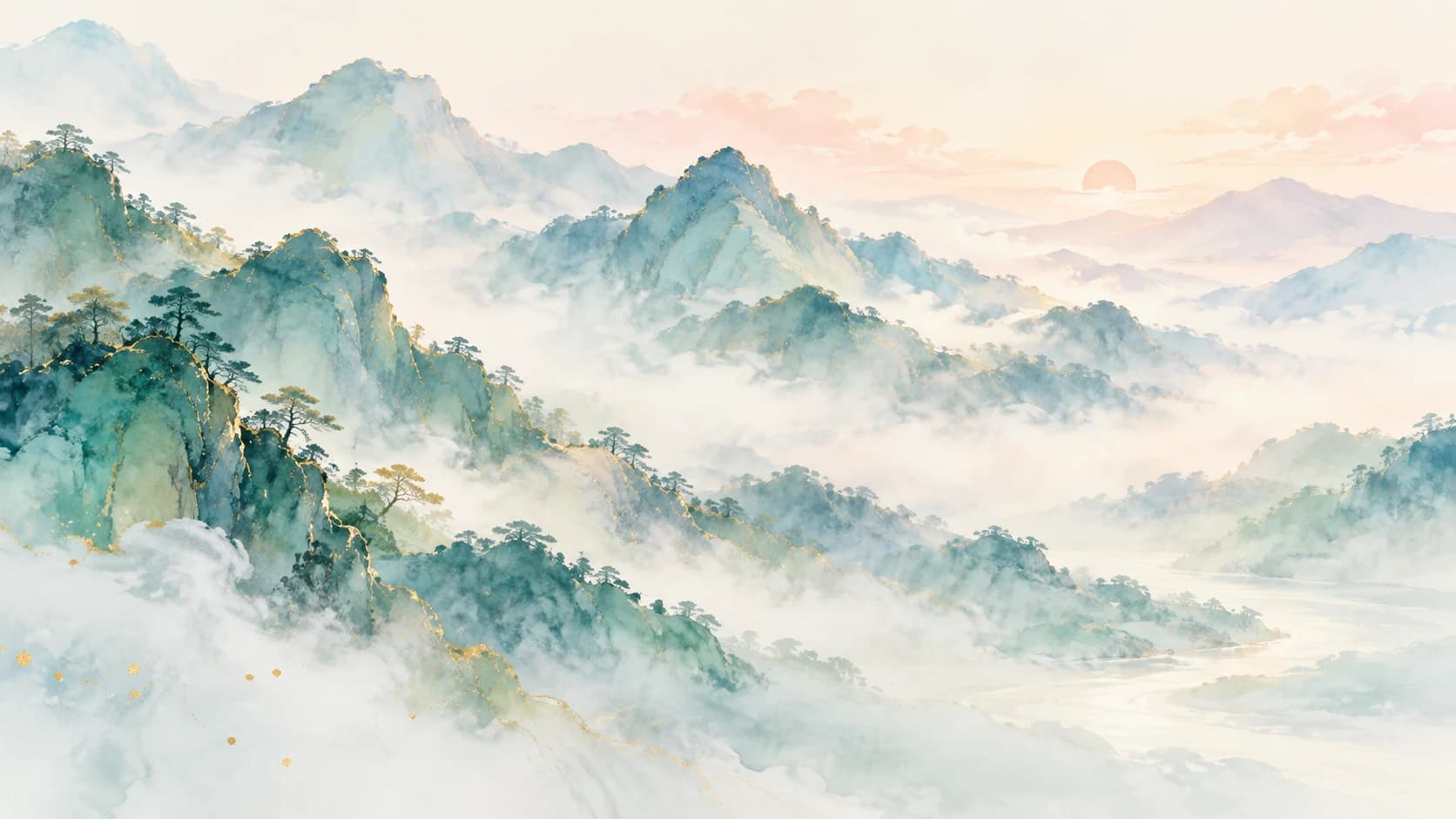
Beginning again Existing classic artwork keeps the presentation understated.
Fuchu treats resilience as permission to begin again. It is a reflective option for someone whose idea of persistence includes revisiting an earlier direction. The name does not ask you to preserve every former plan; its useful question is what you would like to return to.
复 means return or restore; 初 means beginning. Laozi 16 describes things returning to their roots, 各复归其根, which offers a thematic echo. It is not a source for an exact quotation “复初”. 许–复–初 follows 3–4–1.
In everyday use: Fùchū sounds like 付出, to give or expend effort. 恢复的复,开始的初 identifies the intended spelling. The name is literary and compact; try it aloud before deciding whether that reflective register feels like you.
程若水 Chéng Ruòshuǐ: A flexible way forward
Example full name: 程若水 — Chéng Ruòshuǐ. Base tones: 2–4–3. 程若水 has dictionary tones 2–4–3.
程若水
In Chinese you can call me程若水
A flexible way forward
A flexible way forward Existing water-themed artwork accompanies flexibility and reflective calm.
Ruoshui is the most familiar philosophical image in this group. Its appeal is a way of responding to circumstances: water can take different forms and courses. Read that as an aspiration toward flexible persistence, rather than a promise that nothing can harm you.
The immediate source is 上善若水 in Laozi 8; the chapter goes on to discuss benefiting things without contention. 若 means like and 水 means water. Chapter 78 develops the yielding-water image further. 程–若–水 follows 2–4–3; none of those tone numbers describes personality.
In everyday use: The phrase is recognisable, but listeners may still ask which ruò you use. Explain 如果的若,清水的水. As an open-style choice it can be heard differently across people and surnames.
方持简 Fāng Chíjiǎn: Holding to essentials
Example full name: 方持简 — Fāng Chíjiǎn. Base tones: 1–2–3. 方持简 has dictionary tones 1–2–3.
方持简
In Chinese you can call me方持简
Holding to essentials
Holding to essentials Existing scholar artwork accompanies the literary register.
Chijian is the least pictorial choice: it centres a practice rather than a landscape. The idea is to keep what matters when life becomes crowded. This makes its resilience link quieter and less immediate than Renzhi or Yuji, but useful if simplicity is how you prefer to regain direction.
持 is to hold or maintain; 简 is simple or concise. Their combination is an editorial proposal, with no specific ancient quotation claimed. 方 gives a level opening before rising 持 and third-tone 简: 1–2–3.
In everyday use: The name has a slightly motto-like quality. That may appeal to someone who likes an understated literary name, but it is worth testing in ordinary introductions. 持续的持,简单的简 makes the spelling clear.
周安澜 Zhōu Ānlán: Calm waters regained
Example full name: 周安澜 — Zhōu Ānlán. Base tones: 1–1–2. 周安澜 has dictionary tones 1–1–2.
周安澜
In Chinese you can call me周安澜
Calm waters regained
Calm waters regained Existing cloud artwork accompanies clearing and settled weather.
Anlan offers a destination for resilience: steadiness after disturbance. 安澜 is an established expression for calm waters and, figuratively, peace. It is a natural option if you want the result of finding balance to be more prominent than the struggle to get there.
安 is peaceful and 澜 means large waves; the compound 安澜, not 澜 alone, supplies the calm-water meaning. Wang Bao’s 四子讲德论 uses 天下安澜 in a political context. Applying this to personal recovery is our naming interpretation. 周–安–澜 follows 1–1–2.
In everyday use: Lán also sounds like 兰 and 蓝. Explain 安宁的安,波澜的澜. This complete name has a relatively open presentation in our editorial judgment, while the final impression will still depend on context and personal associations.
魏若谷 Wèi Ruògǔ: Room for another view
Example full name: 魏若谷 — Wèi Ruògǔ. Base tones: 4–4–3. 魏若谷 has dictionary tones 4–4–3.
魏若谷
In Chinese you can call me魏若谷
Room for another view
Room for another view Existing tree-and-palace artwork provides a composed setting.
Ruogu connects resilience with openness to another view. Its familiar association is 虚怀若谷: being receptive and modest. That can support adaptability when a first approach fails, though modesty and resilience are not identical qualities.
若 means like, and 谷 means valley. The idiom supplies the cultural association; “adapting after difficulty” is our further interpretation. 魏–若–谷 follows dictionary tones 4–4–3, ending in a third-tone syllable.
In everyday use: Gǔ sounds like 鼓 and 骨 in Mandarin. 山谷的谷 identifies the intended character. Choose Ruoshui if you prefer a flowing-water image; Ruogu is more closely tied to modesty and receptiveness.
Which of these five fits you?
| Name | Main emphasis | Practical distinction |
|---|---|---|
| 许复初 · Xǔ Fùchū | Beginning again | Fùchū sounds like 付出, to give or expend effort. |
| 程若水 · Chéng Ruòshuǐ | A flexible way forward | The phrase is recognisable, but listeners may still ask which ruò you use. |
| 方持简 · Fāng Chíjiǎn | Holding to essentials | The name has a slightly motto-like quality. |
| 周安澜 · Zhōu Ānlán | Calm waters regained | Lán also sounds like 兰 and 蓝. |
| 魏若谷 · Wèi Ruògǔ | Room for another view | Gǔ sounds like 鼓 and 骨 in Mandarin. |
Try saying a full introduction with two favourites, then writing each in the script you normally use. A name that reads beautifully on a card may still require an explanation in speech. Ask a Mandarin speaker how the complete name lands with your own surname, especially if you plan to use it at work or in a particular community.
How do the three styles differ?
The masculine selection uses direct 韧, lasting 恒 and active 行健; the feminine selection puts recovery, inner constancy and renewal in 雨霁, 筠心 and 新萌; the gender-neutral selection favours reflective choices such as 复初 and 若水. Compare the complete names rather than treating any individual character as belonging to one gender.
These are aspirations and aesthetic choices, not predictions of temperament or promises of recovery. If you want a more personal starting point, consider which image and sound you would willingly introduce as your own.